The ONLY marketing automation platform with no Data Drift
Data Drift
The Hidden Leak in Your Marketing ROI
Most marketing teams chasing hyper-personalization have accidentally baked a hidden problem into their data stack: Data Drift.
As established in our deep dive on Composable CDPs Explained, the most effective marketing is fueled by a single source of truth. However, the traditional Packaged CDP model operates on a "copy-paste" architecture. To use it, you need to move data from your central warehouse into a proprietary vendor silo.
The moment that data is copied, it begins to age. The gap between what your company actually knows (the warehouse) and what your marketing tools think they know (the CDP) is Data Drift. For the performance-driven marketer, this isn't just a technical lag - it’s a direct drain on ROI.
Traditional CDPs rely on API syncs or batch uploads to stay current. If a customer hits a new loyalty threshold, processes a return, or updates a preference in your backend system at 10:00 AM, but your CDP doesn’t “sync” until 4:00 PM, you’re operating in a state of drift for six hours.
During that window, your automation is firing based on a “ghost” of the customer’s past, not their current reality.
When your activation layer is disconnected from your source of truth, the consequences appear as three specific drains on your marketing efficiency:
1. The “Success Tax” on Your Budget In a packaged model, you pay to store your data twice. As your customer base grows, your CDP costs skyrocket because you are charged for the volume of data stored rather than the value of the data activated. This often forces “data pruning,” where marketers delete “inactive” records to stay under budget—effectively throwing away years of historical context that could fuel high-LTV modeling.
2. The Reconciliation Trap If your segment counts in a “VIP” campaign don’t match the actual sales data in the warehouse, your internal credibility is damaged. Instead of optimizing creative or testing new channels, your team spends 20% of their week in data reconciliation meetings, trying to figure out which spreadsheet is accurate. This is a massive waste of high-value human capital.
3. The Experience Gap and Wasted Conversion Data Drift is the reason customers receive “Abandoned Cart” emails for items they bought an hour ago. Every irrelevant or lagging message erodes trust and increases unsubscribe rates. In a market where Customer Acquisition Cost (CAC) is at an all-time high, you can’t afford to burn your existing audience with hallucinated personalization based on 12-hour-old data.
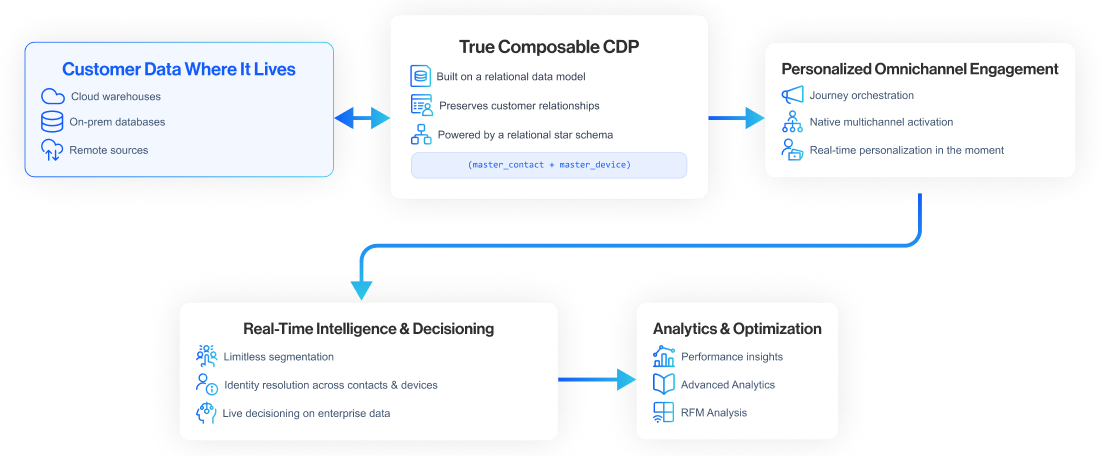
A Composable CDP fixes Data Drift at the root. Instead of creating a “second version” of the truth, a composable architecture – like the one powering D·engage – sits directly on top of your existing warehouse.
By querying the warehouse directly, the sync phase is eliminated entirely.
In a composable environment, the data warehouse remains the Center of Gravity. As soon as a data point updates in the warehouse, it’s immediately available for activation. There’s no lag, no copying, and zero drift. Marketing and Data teams see the same screen, the same numbers, and the same customer reality.
The goal of the modern marketer isn’t to be a data mover. Your value lies in being a Data Activator.
If your current CDP requires constant maintenance to keep its data “fresh,” you aren’t running a personalization strategy—you’re managing a sync schedule. By switching to a Composable CDP architecture, you stop paying for two truths and start benefiting from a single, unshakeable source of truth that drives measurable ROI.
The future of marketing isn’t a better silo; it’s a direct connection to the truth.
See how leading brands use our platform to enhance performance, improve customer experiences, and achieve measurable business outcomes.
“We boosted our efficiency with D•engage through automation, real-time data sync, and AI-driven targeting, achieving 83% higher account funding and 60% improved operations. All this in just the first year of its integration - This is truly phenomenal”
Monis Usman, EVP Head of Digital Business & Marketing
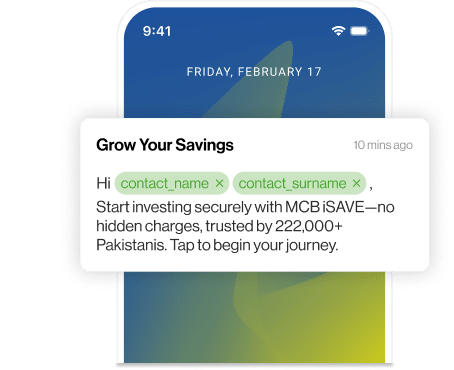
“D·engage’s platform perfectly aligned with Sportive’s business needs. The platform demonstrated superior performance in integrating customer data, generating personalized content, and automation capabilities”
Anıl Can Öztürk, Digital Commerce Director
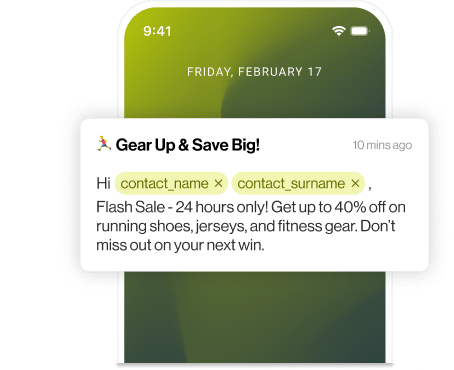
“Since we started working with D•engage, we’ve gained significant operational efficiency in segmentation, campaign management, and omnichannel communication. We can design personalized campaigns end-to-end through the panel and easily measure content performance with A/B testing.”
Gürhan Öztürk, Communication and Platform Manager
“Sending SMS and email messages without any disruptions is very important in banking processes. Any interruptions can affect our entire sales process. Therefore, the 24/7, high-availability of the platform we use is extremely critical for us.”
Korhan Kocabıyık, Platforms Development Director


Bring all your data, channels, and customers together in one connected platform that works as fast as you do.