The ONLY marketing automation platform with a composable CDP
If you've been researching privacy-first marketing technologies, you'll have already come across customer data platforms (CDPs) and data clean rooms. They're often mentioned together, so it's easy to assume they're different ways of solving the same problem.
They're not.
A CDP helps you understand and activate your own customer data.
A data clean room helps you collaborate with someone else's.
Both technologies work with data, but they do very different things. To figure out which one should be the priority for your business, you need to consider which problem you're currently trying to solve.
In this guide, we'll explain the difference between a CDP and a data clean room, when you need each one, and why most organizations benefit from building a strong customer data foundation through a CDP before investing in external data collaboration with a clean room.
CDPs and data clean rooms solve different problems
The main thing to remember is that customer data platforms and data clean rooms aren’t competing technologies. They support different stages of the customer data lifecycle and are designed to solve different business challenges.
| If your goal is... | You probably need... |
|---|---|
| Unify customer data from multiple systems | CDP |
| Create a single customer view | CDP |
| Build audience segments and personalized campaigns | CDP |
| Analyze audience overlap with a partner | Data clean room |
| Measure campaign performance across organizations | Data clean room |
| Collaborate on customer data without sharing raw records | Data clean room |
The best way to think about the difference is this: a CDP helps you activate your own customer data, while a data clean room helps you analyze customer data together with a trusted partner in a privacy-safe environment.
Once you understand the problem you’re trying to solve, choosing the right technology becomes much clearer.
CDPs solve internal customer data problems
Most organizations have plenty of customer data, but struggle to activate it because it’s scattered across different systems:
- Purchase history lives in an ecommerce platform
- Email engagement sits in a marketing tool
- Customer support interactions are stored in a help desk
- Loyalty data, mobile app activity, and website behavior exist in separate platforms of their own.
Without a way to connect that information, it’s difficult to build a complete picture of each customer.
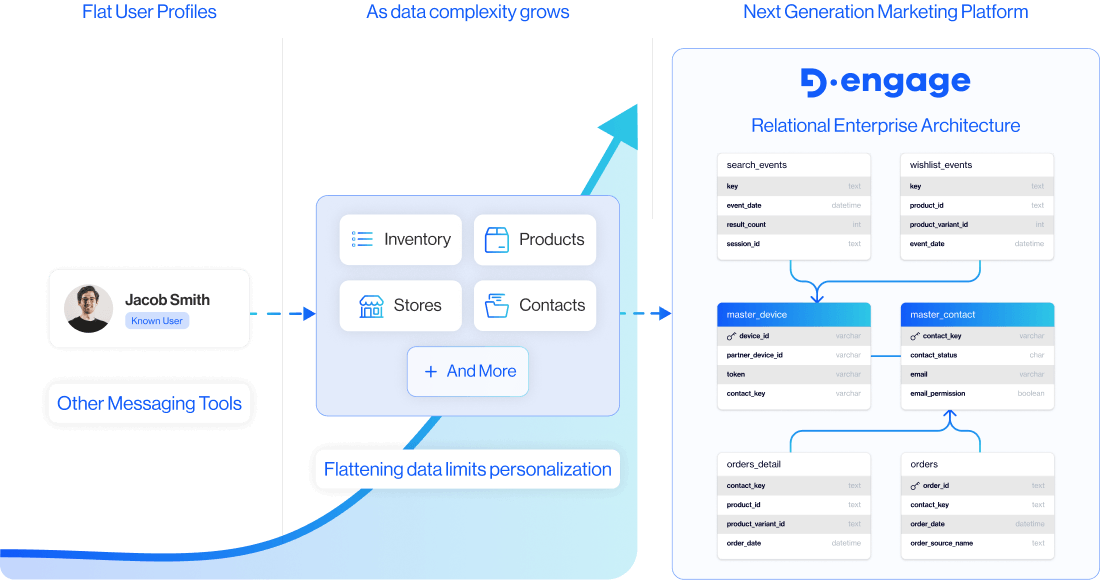
A customer data platform solves this challenge by bringing customer data together into a single, unified profile. Through identity resolution, it connects interactions across channels and touchpoints, creating a more complete view of every customer.
That unified foundation makes it easier to segment audiences, personalize experiences, automate customer journeys, and measure marketing performance.
Data clean rooms solve external collaboration problems
A CDP helps you understand what’s happening inside your own business, but sometimes the answers you’re looking for exist in someone else’s data:
- Whether your advertising campaign led to purchases at a retail partner
- Exploring a co-marketing opportunity and want to understand how much your audiences overlap before investing budget
- Measuring campaign performance across organizations without exposing sensitive customer data.
These are the kinds of challenges a data clean room can help with. It can’t help you build better customer profiles like a CDP does, but it can enable trusted partners to generate shared insights while keeping proprietary data protected.
Do you need a CDP, a data clean room, or both?
Now that we’ve looked at what each technology is designed to do, the obvious question is whether you actually need bot.
The answer depends on your goals.
If your priority is understanding your own customers, creating holistic customer profiles, and delivering personalized experiences, a CDP is the right place to start.
But, if your main priority is collaborating with retailers, publishers, or other trusted partners without sharing raw customer data, you need a data clean room.
For many organizations, the two technologies work best together because a CDP creates the trusted customer data foundation, while a data clean room extends the value of that data through privacy-safe collaboration.
Why most organizations benefit from using a CDP first
Data clean rooms open up valuable opportunities for collaboration, but they’re not the starting point for a customer data strategy.
Before organizations can measure audience overlap, analyze shared campaign performance, or collaborate with partners, they first need to have confidence in their own customer data. They need to understand who their customers are, how they interact with the brand, and how to turn those insights into more relevant marketing.
That’s exactly what a customer data t is designed to do. By creating a unified view of each customer, a CDP helps organizations improve personalization, segmentation, journey orchestration, and campaign performance long before external collaboration becomes a priority.
Start with the problem, not the platform
Customer data platforms and data clean rooms both have an important role to play. The decision about whether to choose a CDP or a data clean room lies in which business challenge you’re trying to solve.
By understanding where each one fits, organizations can make smarter technology investments and build a customer data strategy that’s ready for whatever comes next.
Building a successful customer data strategy starts with the right foundation. Book a demo to see how D·engage helps organizations unify customer data, create richer customer profiles, and prepare for the next generation of privacy-first marketing.
Moments We Help You Own
See how leading brands use our platform to enhance performance, improve customer experiences, and achieve measurable business outcomes.
Case Study
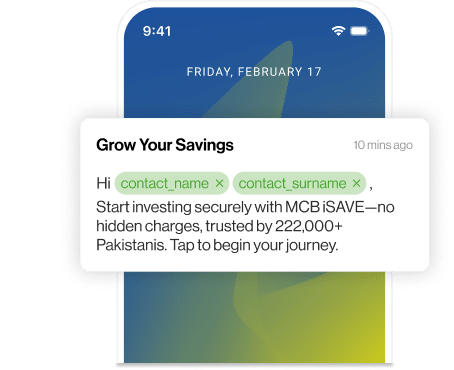
How MCB Funds achieved an 83% boost in account funding
“We boosted our efficiency with D•engage through automation, real-time data sync, and AI-driven targeting, achieving 83% higher account funding and 60% improved operations. All this in just the first year of its integration - This is truly phenomenal”
Monis Usman, EVP Head of Digital Business & Marketing- 83%improvement in account funding ratio
- 30%increase in average transaction size
- 60%improvement in operational efficiency

Case Study
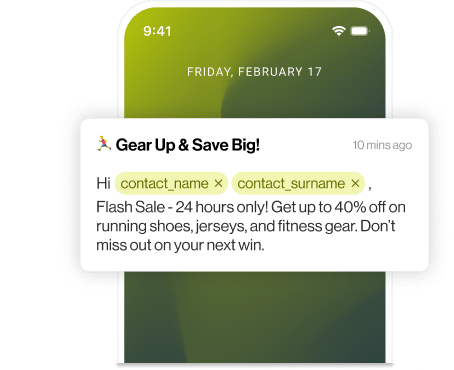
Sportive Increases Transaction Value by 38% with D·engage CRM Integration
“D·engage’s platform perfectly aligned with Sportive’s business needs. The platform demonstrated superior performance in integrating customer data, generating personalized content, and automation capabilities”
Anıl Can Öztürk, Digital Commerce Director- 38%increase in transaction value
- 17%increase in customer shopping frequency
- 21%increase in Google Ads ROAS

Case Study
Beymen drives 30% more clicks and 15% more revenue with D•engage
“Since we started working with D•engage, we’ve gained significant operational efficiency in segmentation, campaign management, and omnichannel communication. We can design personalized campaigns end-to-end through the panel and easily measure content performance with A/B testing.”
Gürhan Öztürk, Communication and Platform Manager- 30%increase in click-through rates
- 15%additional monthly revenue
- 15%time savings in operational processes


Case Study
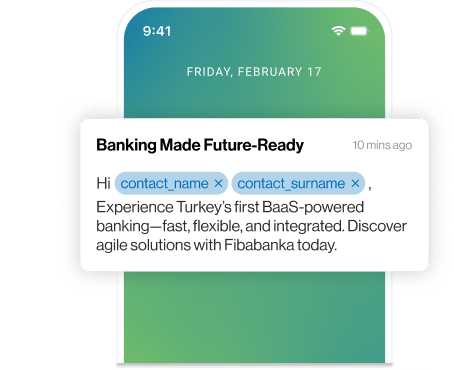
How Fibabanka Achieved 0% Downtime and 35% Cost Savings with D·engage
“Sending SMS and email messages without any disruptions is very important in banking processes. Any interruptions can affect our entire sales process. Therefore, the 24/7, high-availability of the platform we use is extremely critical for us.”
Korhan Kocabıyık, Platforms Development Director- 35%reduction in costs
- 18%reduction in time.
- 0%downtime with on-premise platform

Related Articles
Start Engaging Smarter
Bring all your data, channels, and customers together in one connected platform that works as fast as you do.