Most marketing teams have started experimenting with AI. Fewer have unlocked the business impact they expected. This guide explores why the outcomes vary so widely, and what marketers can learn from the difference.
If you're responsible for CRM, marketing operations, customer engagement, or the MarTech stack that supports it, chances are you've been pitched AI more
times than you can count.
Every platform now claims to be AI-powered. Subject lines can be generated in seconds. Audiences can be recommended automatically. Entire campaigns can be built with a prompt. Yet, despite widespread adoption, many organizations still struggle to translate AI experimentation into measurable business impact.
In this guide, we'll look beyond feature checklists to explore why so many AI initiatives underdeliver, and what separates meaningful intelligence from clever demonstrations. You'll learn how to evaluate marketing AI through the lens of architecture, data readiness, workflow design, and governance, rather than promises alone.
We'll explore the five conditions that effective marketing AI depends on: live access to customer data, the ability to combine predictive and generative capabilities, embedded workflows that connect insight to action, built-in anomaly detection, and natural language interfaces that empower marketers instead of creating new dependencies.
The AI Hype Gap: What's Actually Going Wrong?
If you spend enough time reading MarTech websites, you’d be forgiven for thinking that marketing AI has already solved everything.
Every platform promises smarter customer segmentation, automated decision-making, personalized content, and self-optimizing campaigns. Yet many teams find themselves asking an uncomfortable question once the excitement of implementation wears off:
If AI is so powerful, why aren’t we seeing better results?
It’s easy to blame the models, but they’re (usually) not the problem.
Large language models have become remarkably good at generating content. Predictive models have been helping businesses anticipate customer behavior for years. The challenge often isn’t the intelligence itself. It appears when those capabilities are introduced into systems that were designed for a very different era of marketing.
Many MarTech platforms were built long before AI became a boardroom priority. Rather than redesigning the foundations, new capabilities have been added over time to architectures shaped by siloed data, rigid schemas, batch processing, and workflows that still depend heavily on manual effort.
That creates a data freshness problem.
Customer behavior changes quickly. A shopper abandons a basket. An investor moves funds. A subscriber stops engaging. A traveler books a trip. The signals that influence the next best action can emerge and disappear within hours. When AI relies on overnight updates or delayed snapshots of customer data, it can only respond to what happened yesterday.
Then there’s the gap between insight and action.
The AI identifies an opportunity. It recommends an audience. It suggests the next step. But marketers still need to build the segment, configure the journey, prepare the campaign assets, and launch everything themselves. The AI may surface the insight, but much of the work involved in acting on it hasn’t changed.
That disconnect helps explain one of the biggest tensions in marketing AI today. McKinsey found that 88% of organizations now use AI in at least one business function, yet only 6% report any meaningful bottom-line value from those investments.
The conversation has moved beyond whether teams should experiment with AI. The focus now is on creating the conditions that allow it to make a measurable difference.
Even sophisticated models struggle to deliver lasting impact when they’re working with delayed data and disconnected workflows. The foundations matter just as much as the features built on top of them.
What Good Marketing AI Looks Like: An Evaluation Framework
As marketing AI becomes more common, feature lists have become a less reliable way of judging value.
Questions like “can it generate content?”, “can it build audiences?” and “can it summarize campaign performance?” only tell you what a platform can demonstrate in a demo. They reveal much less about how well that intelligence will hold up once it becomes part of your everyday marketing operations.
A better starting point is to look at the conditions supporting the technology itself.
1. Does it have access to live customer data?
AI can only respond to the information it has available.
If it relies on copied datasets, scheduled synchronizations, or static snapshots, blind spots begin to appear. Customer behavior moves quickly, and recommendations lose relevance when they’re based on an outdated view of the customer.
Access to live, unified data allows intelligence to reflect what’s happening now rather than what happened yesterday.
2. Does it combine predictive and generative capabilities?
Generative AI has captured most of the attention in marketing. But while drafting copy, creating campaign variations, and generating subject lines can save teams a significant amount of time, efficiency is only one part of the puzzle.
Prediction is another. Predictive AI helps marketers answer questions such as:
- Which customers might need attention?
- Where are the biggest opportunities?
- When is the right moment to engage?
The strongest marketing AI combines both approaches, helping teams understand what to do next while making it easier to put those decisions into action.
3. Is it embedded in the workflow?
Insights only become valuable when teams can act on them.
When recommendations sit separately from campaign execution, marketers still need to translate guidance into action themselves. Audiences are rebuilt manually, journeys are configured across multiple tools, and valuable time is lost moving between systems.
The closer intelligence sits to the workflow itself, the easier it becomes to move from identifying an opportunity to acting on it.
4. Can it spot problems before they grow?
Automation brings scale, but scale has a habit of magnifying small issues.
Campaign performance changes, data quality problems emerge and customer behavior can be unexpected. Without visibility into all the moving parts, teams often discover problems after they’ve already started affecting results.
Strong AI systems help marketers optimize performance while keeping an eye on it at the same time.
5. Can marketers actually use it?
If building audiences requires SQL knowledge or sending tickets to the data team, marketers remain dependent on the same bottlenecks they’ve always faced. Natural language interfaces open those capabilities up to more people, allowing teams to explore insights and take action using the language they already use every day.
Taken together, these five conditions offer a more practical way to evaluate marketing AI than a feature checklist.
The platforms most likely to create lasting value aren’t always the ones with the longest list of AI capabilities. More often, they’re the ones that make intelligence easy to use, connect it to current customer context, and fit naturally into the way marketers already work.
How Zeki AI Turns Principles Into Practice
Zeki AI provides a practical example of what these conditions can look like when they’re built into the foundations of a marketing platform.
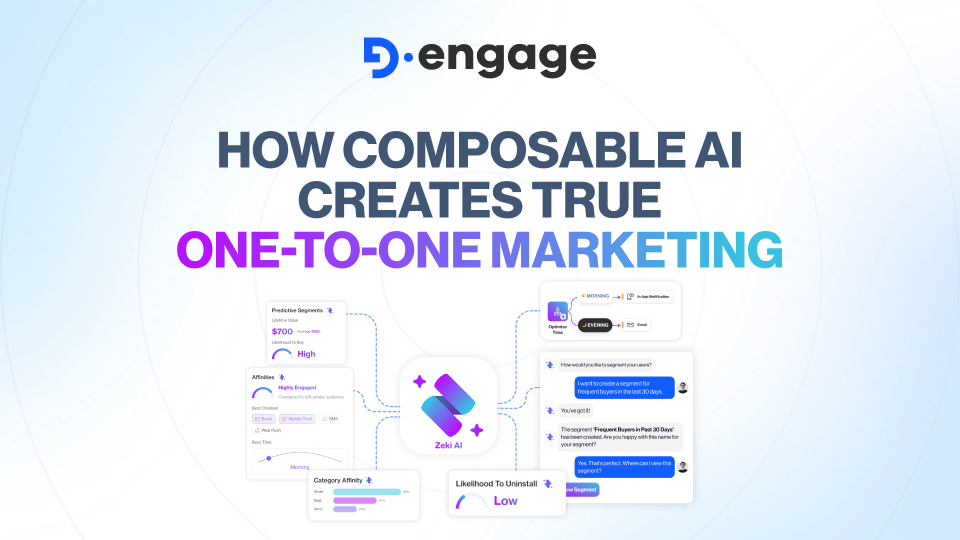
Serving as the intelligence layer behind D·engage, Zeki is designed to help marketers understand their customers, predict what’s likely to happen next, and protect performance as they scale.
Understand: Start with current customer context
Zeki works directly with D·engage’s live customer data layer, including unified customer profiles, relational tables, and remote sources.
Rather than relying on duplicated datasets or delayed snapshots, teams can work from an up-to-date view of customer activity. Purchases, app interactions, engagement changes, and other signals can all contribute to a clearer understanding of what’s happening across the customer journey.
Predict: Surface opportunities earlier
Some customer signals are obvious, but a lot are easy to miss until the opportunity has already passed.
Zeki’s Predictive Analytics capabilities help teams uncover patterns that may not be visible through traditional segmentation alone. Marketers can identify emerging opportunities, prioritize their efforts more effectively, and focus attention where it’s likely to have the greatest impact.
Create: Support better execution
Creating relevant experiences at scale takes time.
Zeki’s AI-assisted content capabilities help marketers generate subject lines, message variations, recommendations, and campaign content more efficiently. Starting points arrive faster, leaving teams with more time to refine ideas, tailor messaging, and apply the judgement that only people can bring.
Decide: Shorten the distance between insight and action
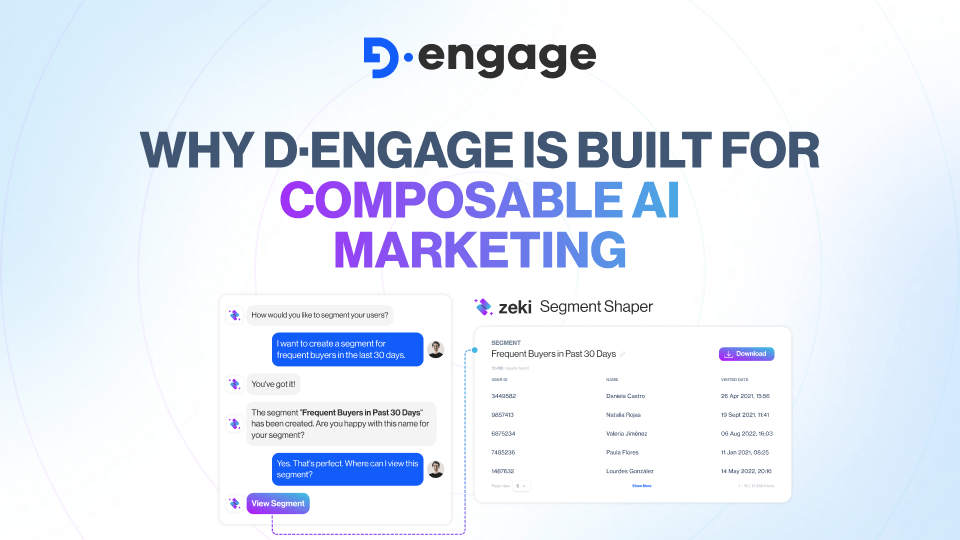
Segment Shaper allows marketers to describe audiences using natural language.
A request such as: “Customers who purchased in the last 30 days but haven’t opened an email this week” can be translated into a ready-to-use audience within D·engage itself.
Instead of moving between systems or rebuilding segments manually, teams can activate those audiences directly within their campaign workflows.
Protect: Monitor performance as you scale
As automation increases, visibility becomes more important.
Smart Insights helps marketers identify unusual patterns in campaign performance and customer behavior, highlighting potential issues before they have a chance to affect engagement metrics more significantly.
That additional layer of oversight gives teams greater confidence as they scale their use of AI-driven decision-making.
Together, these capabilities help make intelligence part of the marketer’s everyday workflow rather than something that sits alongside it. The result is a more connected experience, where insights are easier to generate, decisions are easier to act on, and customer experiences can evolve alongside the people they’re designed to serve.
Turning Intelligence Into Outcomes: What Zeki AI Looks Like in Action
Across industries, marketers are often trying to answer the same questions: How do we identify customers before they disengage? How do we deliver more relevant experiences without increasing campaign volume? How do we improve results without creating more work for already stretched teams?
The framework becomes much easier to understand when you see it in action.
Financial services: engaging customers before the moment passes
Timing matters: especially for financial institutions.
Traditional segmentation often relies on broad rules and historical reporting, which can make it difficult to spot subtle changes in customer behavior before they become larger problems. By the time someone has disengaged completely, the opportunity to reconnect may already have been missed.
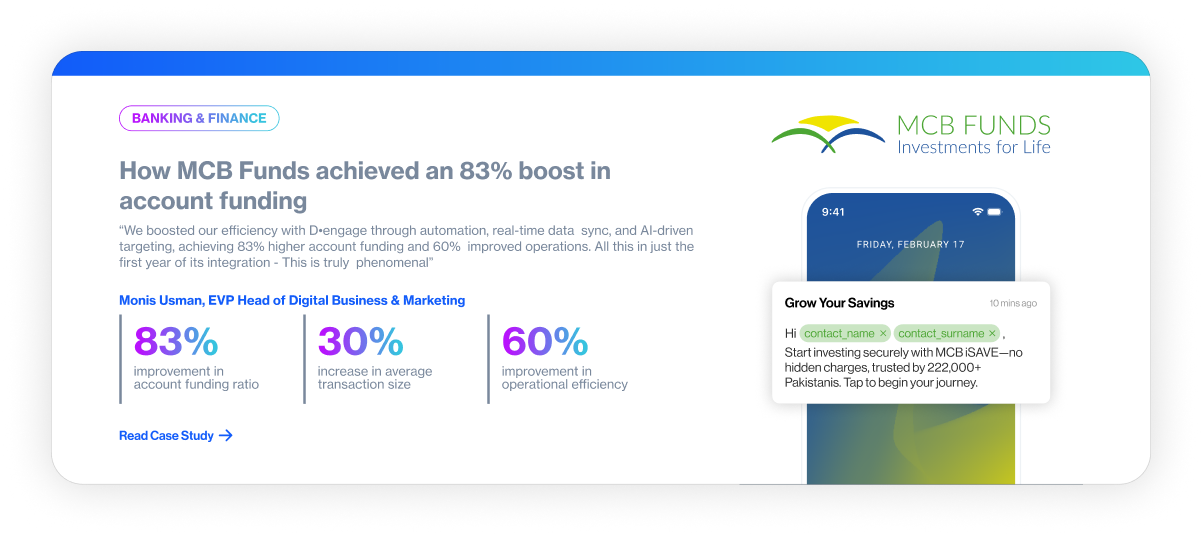
MCB Funds needed a way to identify investors who were showing signs of reduced engagement and encourage them to take action before that window closed.
Using predictive insights to surface early signals of changing behavior, the team was able to focus their efforts on the customers who needed attention most. Dynamic audiences evolved as customer activity changed, while personalized communications supported more relevant engagement throughout the journey.
The result was an 83% improvement in account funding ratios, alongside a 60% increase in operational efficiency.
Rather than reacting after the fact, the team was able to intervene earlier and direct their attention where it could have the greatest impact.
Read the MCB Funds case study.
Retail: making personalization feel more personal
Retail customers expect experiences that reflect their interests and behaviors, but increasing campaign volume doesn’t necessarily improve results. More messages can quickly become more noise.
Sportive wanted to increase purchase frequency and transaction value without overwhelming customers or creating additional complexity for internal teams.
By combining customer insights with dynamic audience management, the team was able to adapt campaigns in line with changing behaviors and buying signals. Communications became more relevant to the people receiving them, while marketers spent less time managing manual processes behind the scenes.
The outcome was a 38% increase in transaction value and a 17% increase in purchase frequency.
The gains came from making each interaction more timely and relevant. Across both examples, the technology itself fades into the background.
What stands out is the ability to respond earlier, focus effort where it matters most, and create experiences that feel more useful to customers. When intelligence is connected to the systems marketers already rely on, better decisions become easier to make and meaningful results become easier to achieve.
Read the Sportive case study.
The Trust Question: AI, Consumer Perception, and Brand Safety
For all the excitement surrounding AI, there’s another side to the conversation that marketers can’t afford to ignore: trust.
Consumers are becoming more wary of brands using AI-generated content. Research from eMarketer found that when consumers recognize AI-generated experiences, they’re four times more likely to trust a brand less.
That presents an interesting challenge for marketers.
Generative AI has made it possible to produce content at startling speed and scale. The ability to create more emails, more variations, and more campaigns might seem like a super power but, based on this research, it could actually be damaging.
This is where the role of the marketer becomes even more important.
While AI can surface opportunities, suggest actions, and help teams move more efficiently, human judgement, brand voice, and the ability to understand nuance and context matter more than ever.
That’s why D·engage approaches AI as a team-mate rather than a replacement for human decision-making. Tools such as Smart Insights help teams monitor performance and identify unexpected patterns, while marketers retain control over the experiences they choose to create and activate.
Those that earn trust will do it by combining artificial intelligence with relevance, oversight, and a clear understanding of the customers they serve.
Looking Beyond the Hype
Marketing AI has reached an interesting turning point.
The conversation is no longer about whether AI has a place in customer engagement: most organizations have already started experimenting with what the technology can do. Now the focus is on understanding which approaches are built to deliver lasting value and which simply add another layer of complexity.
As we’ve explored throughout this guide, the answer often lies beneath the surface. The most important questions often have less to do with the capabilities on display and more to do with the conditions supporting them.
These foundations may not generate the same excitement as flashy demos, but they play a significant role in determining whether AI becomes a meaningful part of everyday marketing or another promising idea that struggles to move beyond the pilot phase.
The brands that stand to benefit most from AI won’t necessarily be the first to adopt every new capability. They’ll be the ones that approach it with clarity, connecting intelligence to customer context, applying human judgement where it matters, and focusing on experiences that feel timely, relevant, and genuinely useful.
If you’re exploring how AI could support your customer engagement strategy, understanding the foundations behind the technology is a good place to start. Discover how Zeki AI helps marketers turn customer data into insights, predictions, and actions within D·engage.
Moments We Help You Own
See how leading brands use our platform to enhance performance, improve customer experiences, and achieve measurable business outcomes.
Case Study
How MCB Funds achieved an 83% boost in account funding
“We boosted our efficiency with D•engage through automation, real-time data sync, and AI-driven targeting, achieving 83% higher account funding and 60% improved operations. All this in just the first year of its integration - This is truly phenomenal”
Monis Usman, EVP Head of Digital Business & Marketing- 83%improvement in account funding ratio
- 30%increase in average transaction size
- 60%improvement in operational efficiency


Case Study
Sportive Increases Transaction Value by 38% with D·engage CRM Integration
“D·engage’s platform perfectly aligned with Sportive’s business needs. The platform demonstrated superior performance in integrating customer data, generating personalized content, and automation capabilities”
Anıl Can Öztürk, Digital Commerce Director- 38%increase in transaction value
- 17%increase in customer shopping frequency
- 21%increase in Google Ads ROAS


Case Study
Beymen drives 30% more clicks and 15% more revenue with D•engage
“Since we started working with D•engage, we’ve gained significant operational efficiency in segmentation, campaign management, and omnichannel communication. We can design personalized campaigns end-to-end through the panel and easily measure content performance with A/B testing.”
Gürhan Öztürk, Communication and Platform Manager- 30%increase in click-through rates
- 15%additional monthly revenue
- 15%time savings in operational processes


Case Study
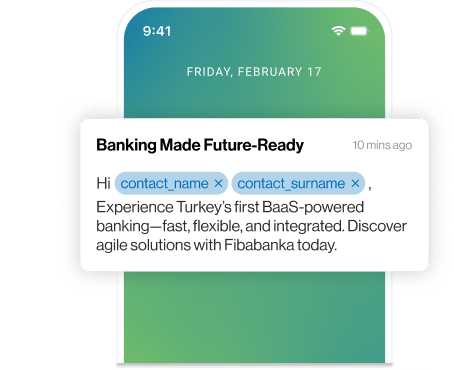
How Fibabanka Achieved 0% Downtime and 35% Cost Savings with D·engage
“Sending SMS and email messages without any disruptions is very important in banking processes. Any interruptions can affect our entire sales process. Therefore, the 24/7, high-availability of the platform we use is extremely critical for us.”
Korhan Kocabıyık, Platforms Development Director- 35%reduction in costs
- 18%reduction in time.
- 0%downtime with on-premise platform

Related Articles
Start Engaging Smarter
Bring all your data, channels, and customers together in one connected platform that works as fast as you do.