The ONLY marketing automation platform with a composable CDP
Today's marketers can personalize emails, recommend products, trigger cross-channel journeys, and tailor content based on customer behavior. Compared to the batch-and-blast marketing of a decade ago, it's a huge leap forward.
But there's one problem: most personalization still isn't truly personal.
If every customer who abandons a cart receives the same email, or every loyalty member enters the same journey, they're still being treated as part of a group rather than as an individual.
That's the difference between personalization and individualization. Rather than asking, "Which segment does this customer belong to?", individualization asks a different question that changes everything:
"What's the best decision for this customer right now?"
Instead of designing experiences around predefined audiences, marketers can continuously adapt every interaction based on a customer's current context, intent, and changing needs.
In this guide, we'll explore why personalization has reached its limits, how individualization changes the way marketing decisions are made, and why composable AI provides the foundation to make it possible.
Personalization Was a Big Step Forward, Individualization is the Next One
Traditional personalization solved one of marketing’s biggest challenges: relevance.
Instead of sending the same campaign to every customer, marketers began tailoring communications around shared characteristics and behaviors. Audiences became more targeted, recommendations became more relevant, and customer journeys became increasingly sophisticated.
But personalization still relies on one core assumption: that customers who exhibit similar behaviors should receive similar experiences.
Whether it’s “customers who abandoned their cart,” “VIP shoppers,” or “people interested in running shoes,” marketing decisions are still being made for groups rather than individuals.
That only works up to a point.
Imagine two customers who abandon a shopping cart.
One has spent weeks researching products and is ready to buy. The other added an item out of boredom before leaving the site a few minutes later.
Traditional personalization often treats them identically because they triggered the same event. But their intent is completely different, so the same follow-up message is unlikely to be equally effective.
As customer expectations continue to evolve, optimizing experiences for the average customer within a segment is no longer enough. The opportunity now lies in understanding the individual behind the segment.
Individualization Starts With Context
Segmentation has limits because customer intent isn’t fixed.
The same customer can be researching, comparing prices, ready to buy, waiting for payday, or looking for support all within the space of a few days. Their needs change all the time, which means the most relevant marketing decision changes too.
Context, and the understanding of where a customer is in their relationship with your brand right now, is key to individualization.
A first-time visitor exploring your website has very different needs from someone returning for the fourth time this week after reading reviews and comparing products. On paper, they may belong to the same audience. In reality, they’re at completely different stages of their buying journey.
Rather than assuming similar customers should receive similar experiences, individualization responds to what’s happening in the moment.
That could mean recommending a product, suppressing a message, switching channels, or simply waiting until the timing is right. Every interaction becomes a decision informed by context rather than a rule triggered by membership of a segment.
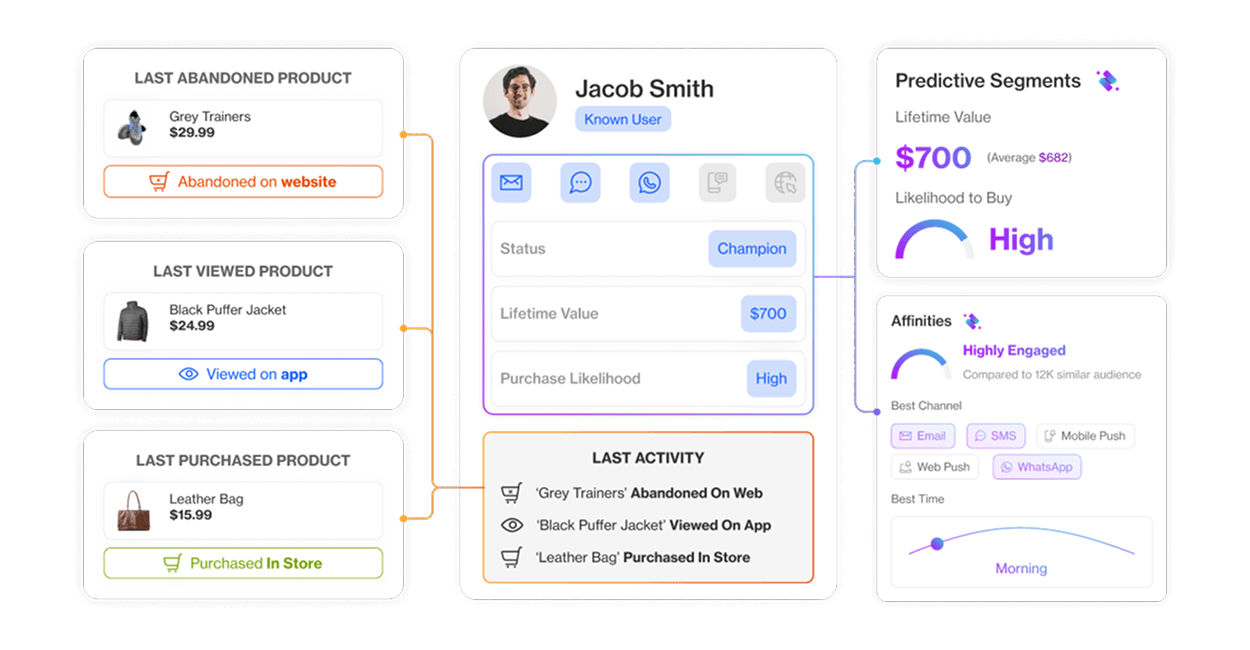
5 Ways Individualization Changes the Customer Experience
Individualization isn’t powered by a single AI feature. Instead, it’s the end result of dozens of marketing decisions being made differently, with every decision informed by real-time customer context rather than static rules.
| Instead of... | Individualization... | What it looks like |
|---|---|---|
| Segmenting customers | Evaluates each customer individually | Two customers in the same segment can receive completely different experiences based on their behavior, intent, and context. |
| Sending campaigns at scheduled times | Predicts the best moment to engage | AI identifies when each customer is most likely to open, click, or convert instead of relying on fixed delays or send times. |
| Showing the same recommendations to similar customers | Recommends what each individual is most likely to need next | Recommendations adapt continuously as customers browse, purchase, and engage across channels. |
| Following predefined customer journeys | Builds journeys that evolve in real time | Every interaction influences what happens next, creating experiences that adapt as customer behavior changes. |
| Optimizing campaigns after they've finished | Learns and improves continuously | AI uses every interaction to refine future decisions, making customer experiences increasingly relevant over time. |
The common thread is context.
Rather than relying on assumptions about what a group of customers might want, composable AI continuously evaluates what each individual customer is doing, predicts what they’re likely to need next, and adjusts the experience accordingly. This kind of marketing becomes increasingly relevant with every interaction.
Why Composable AI Makes Individualization Possible
Most marketing teams are already using AI to write copy, recommend products, predict churn, optimize send times, and generate audience insights. Individually, these capabilities make different parts of marketing more intelligent.
But customers don’t experience your marketing one tool at a time, they experience one holistic relationship with your brand. So even if each system is making smart decisions, if they’re making them independently you’re at risk of creating a fragmented customer experience.
A customer who has already shown strong buying intent might still receive a generic promotional email and someone who has just purchased could continue seeing acquisition ads. Individualization needs those decisions to work together.
That’s why composable AI is the game-changer.
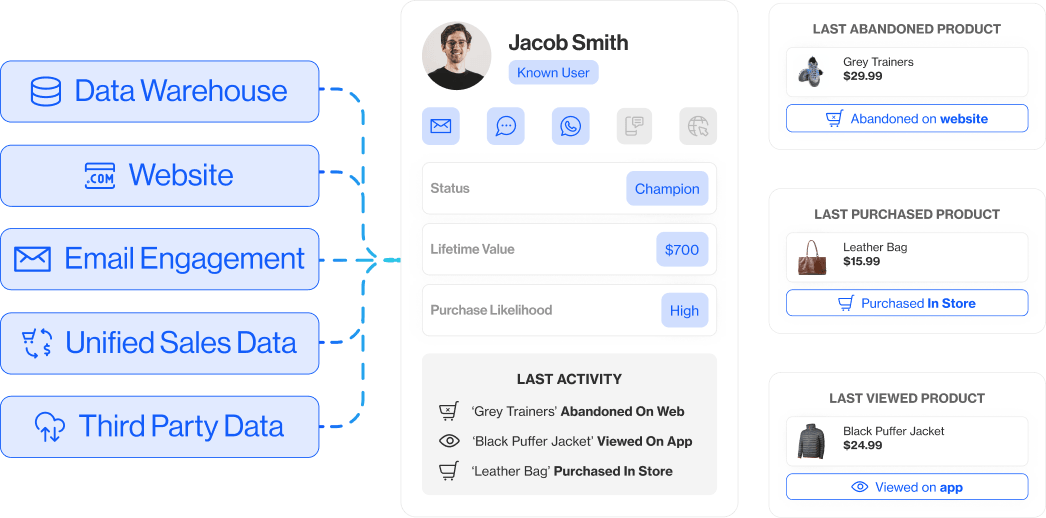
Rather than treating AI as another standalone capability, a composable approach connects customer data, predictive intelligence, decision-making, and channel activation into a single adaptive system. Every interaction informs the next, allowing marketing to respond to the customer as a whole rather than through the lens of individual channels.
This transforms AI from a collection of helpful features into an orchestration engine.
Individualization Is Changing the Role of Marketing
As marketing becomes more adaptive, the marketer’s role changes too.
For years, success depended on building increasingly sophisticated campaigns. Teams invested countless hours creating audiences, mapping journeys, and adding new rules to handle every possible scenario.
AI changes where marketers create value. Instead of defining every step of every journey, marketers define the outcomes they want to achieve, the guardrails that protect the customer experience, and the business priorities AI should optimize for.
That gives teams more time to understand customers, develop creative strategies, experiment with new ideas, and measure commercial impact. In other words, marketers move from building campaigns to designing decision systems.
The brands that succeed will be the ones that combine human creativity with AI-driven decision-making to deliver consistently relevant experiences across every customer interaction.
How D·engage Makes True One-to-One Marketing Possible
True individualization depends on having enough context to understand each customer and the ability to act on that context in the moment. D·engage brings those capabilities together through a composable marketing platform that unifies customer data into continuously updated profiles and connects it directly with predictive intelligence, AI-powered decisioning, and cross-channel activation.
That means marketers can go beyond using segments to determine what happens next. As customers browse, buy, engage, or disengage, D·engage can use those changing signals to help determine the most relevant message, timing, channel, recommendation, or next best action for each individual. Because customer data and activation work together within the same environment, every new interaction can inform the next. This allows marketers to create experiences that continuously adapt instead of forcing customers through predefined journeys.
This style of marketing feels less like personalization at scale and more like a genuinely individual relationship with your brand.
Ready to move beyond traditional personalization?
Book a demo of D·engage to see how composable AI can help you deliver true one-to-one marketing across every customer interaction.
Moments We Help You Own
See how leading brands use our platform to enhance performance, improve customer experiences, and achieve measurable business outcomes.
Case Study
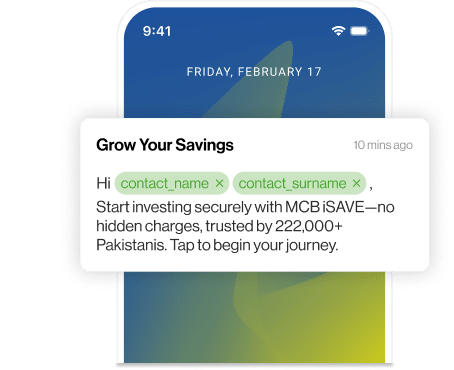
How MCB Funds achieved an 83% boost in account funding
“We boosted our efficiency with D•engage through automation, real-time data sync, and AI-driven targeting, achieving 83% higher account funding and 60% improved operations. All this in just the first year of its integration - This is truly phenomenal”
Monis Usman, EVP Head of Digital Business & Marketing- 83%improvement in account funding ratio
- 30%increase in average transaction size
- 60%improvement in operational efficiency

Case Study
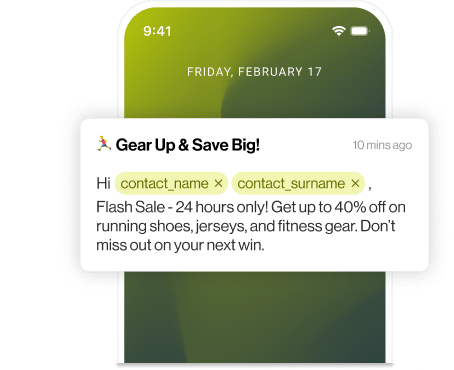
Sportive Increases Transaction Value by 38% with D·engage CRM Integration
“D·engage’s platform perfectly aligned with Sportive’s business needs. The platform demonstrated superior performance in integrating customer data, generating personalized content, and automation capabilities”
Anıl Can Öztürk, Digital Commerce Director- 38%increase in transaction value
- 17%increase in customer shopping frequency
- 21%increase in Google Ads ROAS

Case Study
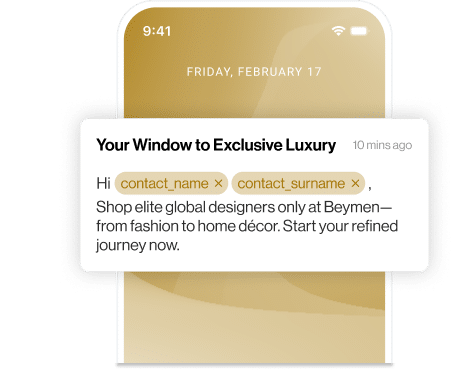
Beymen drives 30% more clicks and 15% more revenue with D•engage
“Since we started working with D•engage, we’ve gained significant operational efficiency in segmentation, campaign management, and omnichannel communication. We can design personalized campaigns end-to-end through the panel and easily measure content performance with A/B testing.”
Gürhan Öztürk, Communication and Platform Manager- 30%increase in click-through rates
- 15%additional monthly revenue
- 15%time savings in operational processes

Case Study
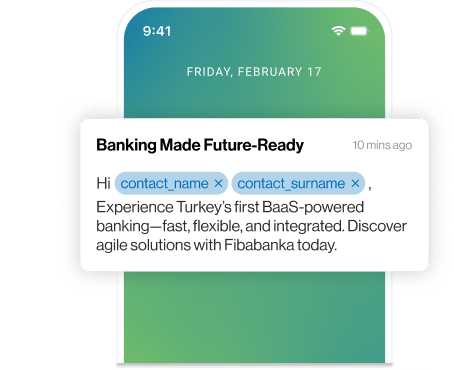
How Fibabanka Achieved 0% Downtime and 35% Cost Savings with D·engage
“Sending SMS and email messages without any disruptions is very important in banking processes. Any interruptions can affect our entire sales process. Therefore, the 24/7, high-availability of the platform we use is extremely critical for us.”
Korhan Kocabıyık, Platforms Development Director- 35%reduction in costs
- 18%reduction in time.
- 0%downtime with on-premise platform

Related Articles
Start Engaging Smarter
Bring all your data, channels, and customers together in one connected platform that works as fast as you do.