The ONLY marketing automation platform with a composable CDP
The privacy-first approach to customer data collaboration.
A data clean room is a secure environment where two or more organizations can analyze shared, anonymized customer data without exposing their raw customer records to each other.
Think of it as a neutral meeting space for data. Each organization brings its own first-party data into the environment, but neither side can see, copy, or take away the other's customer information. Instead, the data is anonymized, matched using privacy-safe techniques, and analyzed within the clean room itself.
Only aggregated insights leave the environment.
What Is a Data Clean Room?
A data clean room is a secure environment where two or more organizations can analyze shared, anonymized customer data without exposing their raw customer records to each other.
Think of it as a neutral meeting space for data. Each organization brings its own first-party data into the environment, but neither side can see, copy, or take away the other’s customer information. Instead, the data is anonymized, matched using privacy-safe techniques, and analyzed within the clean room itself.
Only aggregated insights leave the environment.
What problems do data clean rooms solve?
For marketers, this provides a way to answer questions that would otherwise require direct data sharing:
- A retailer might want to understand whether a brand’s advertising campaign influenced purchases.
- A publisher might want to identify audience overlap with an advertiser.
- Two complementary brands might want to measure shared customer behavior before launching a collab.
In each case, both parties can generate insights without exchanging customer lists or personally identifiable information (PII).
How data clean rooms work in practice
The process is relatively straightforward. Each organization uploads its first-party data (such as customer identifiers, transaction histories, campaign exposure data, or audience segments).
Any sensitive information is anonymized or hashed before analysis takes place. The clean room matches records where appropriate, applies predefined privacy controls, and produces aggregated outputs such as audience overlap reports, attribution analysis, or performance insights. Raw customer-level data never leaves the environment.
Not all data clean rooms are built the same way. Some exist within large advertising ecosystems, such as Google Ads Data Hub and Amazon Marketing Cloud. Others operate as independent platforms, including Snowflake, AWS Clean Rooms, Decentriq, and LiveRamp. Some customer data platforms are also beginning to introduce clean room capabilities directly into their ecosystems.
The limits of a data clean room: privacy still requires governance
Simply moving data into a clean room doesn’t automatically make collaboration private or compliant. Privacy protections depend on how the environment is configured, what data is allowed in, what queries are permitted, and how outputs are controlled. A well-designed clean room can significantly reduce privacy risks, but governance and data management still matter.
Ultimately, a data clean room isn’t a replacement for a customer data strategy. It’s a framework that allows organizations to collaborate on customer insights in a world where unrestricted data sharing is no longer an option.
Data Clean Room vs. CDP vs. DMP
Data clean rooms, customer data platforms (CDPs), and data management platforms (DMPs) are often discussed in the same conversations. All three involve customer data, audience analysis, and marketing activation. But they solve very different problems.
The easiest way to understand the difference is to think about where the data comes from, who uses it, and what outcome they’re trying to achieve.
A CDP is designed to unify and activate your own first-party customer data. It brings together information from across your business to create a single customer view that can be used for segmentation, personalization, lifecycle marketing, and customer engagement. In many organizations, the CDP acts as the foundation of the customer data strategy.
A DMP serves a different purpose. Traditionally, DMPs were built to collect and activate third-party audience data for programmatic advertising. They helped marketers target anonymous users across websites and ad networks using cookies and device identifiers. As third-party cookies disappear and privacy regulations become stricter, the role of the DMP has diminished.
A data clean room isn’t designed to replace either of these systems. Instead, it provides a secure environment where organizations can collaborate using data they already have. Rather than supporting audience activation within your own channels, a clean room enables privacy-safe analysis across multiple organizations without exposing raw customer data.
The distinction becomes clearer when you look at how each technology is used in practice.
The difference between clean rooms, CDPs and DMPs
| CDP | DMP | Data Clean Room | |
|---|---|---|---|
| Primary purpose | Unify and activate first-party customer data | Audience targeting using third-party data | Privacy-safe collaboration between organizations |
| Data source | Primarily first-party data | Primarily third-party data | First-party and second-party data |
| Typical users | CRM, marketing, customer experience teams | Advertising and media teams | Marketing, analytics, data, and partnership teams |
| Outputs | Segments, journeys, personalization, campaigns | Advertising audiences | Audience overlap, attribution, measurement, shared insights |
| Privacy model | Data owned and controlled internally | Relies heavily on external identifiers | Data remains protected and anonymized during analysis |
Put simply, these technologies aren’t competing with each other because they address different stages of the customer data lifecycle.
If the goal is to understand your customers, build segments, personalize experiences, and activate campaigns across owned channels, a CDP should be your starting point.
If the goal is to collaborate with retailers, publishers, media platforms, or strategic partners without sharing customer records, that’s where a data clean room becomes relevant.
And because every clean room analysis depends on the quality of the data being contributed, the effectiveness of your external collaborations often depends on the strength of your internal data foundation first.
Why Privacy-First Collaboration Is Becoming Essential
Data clean rooms didn’t emerge because marketers suddenly wanted a new way to collaborate on customer data. They emerged because the methods that supported data collaboration for the last two decades are becoming less effective, less reliable, and increasingly difficult to justify.
Several industry changes are driving this change, but they’re all pushing organizations in the same direction: toward privacy-first approaches built on first-party and second-party data.
The decline of third-party tracking
For years, third-party cookies helped advertisers track users across websites, measure campaign performance, and build audience profiles at scale. They became the foundation of digital advertising and attribution.
That foundation is growing weaker. Safari and Firefox started restricting third-party tracking technologies prior to 2020, reducing the effectiveness of cookie-based audience targeting and measurement. Google has also been pushing the industry toward privacy-focused alternatives through initiatives such as Privacy Sandbox. Together, these changes have heralded a shift toward first-party data strategies.
Privacy regulations have raised the bar
At the same time, privacy regulations have fundamentally changed how organizations collect, store, and share customer information.
The GDPR established strict requirements around consent, transparency, and data processing across Europe. Similar legislation has since emerged around the world, including CCPA and CPRA in California and a growing number of state-level privacy laws across the United States.
While the specific requirements vary between jurisdictions, the direction of travel is consistent. Organizations are expected to have greater control over customer data, clearer justification for how it’s used, and stronger safeguards when collaborating with external partners.
Sharing raw customer records between organizations can no longer be viewed as a routine business process. It carries legal, operational, and reputational risks that many organizations are unwilling to accept.
Platforms are limiting access to user-level data
Technology platforms are also reshaping the data landscape.
Apple’s App Tracking Transparency (ATT) framework, launched in April 2021, significantly reduced access to cross-app tracking data by requiring users to actively opt in. Similar privacy-focused changes from Google and other platform providers have made user-level measurement more difficult across mobile and digital channels.
For marketers, this means deterministic visibility can no longer be taken for granted. The volume of customer data available for targeting, measurement, and attribution has decreased, while expectations around privacy have increased.
First-party and second-party data are becoming strategic assets
All of these changes are forcing organizations to rethink how they collaborate.
Instead of relying on third-party data providers and cross-site tracking, brands are investing more heavily in first-party data collected directly from their own customers. At the same time, they’re exploring second-party data partnerships with retailers, publishers, media networks, and complementary brands.
In many ways, data clean rooms aren’t creating a new model for collaboration. They’re simply enabling the model that privacy-first marketing increasingly requires.
How Brands Use Data Clean Rooms
The value of a data clean room is found in the questions it helps organizations answer, not necessarily in the tech itself.
As brands invest more heavily in first-party data strategies, they’re looking for ways to collaborate with retailers, publishers, platforms, and strategic partners without exposing customer information. Data clean rooms make that possible.
Here are some of the most common ways organizations are putting them to work.
Use case 1: Understanding audience overlap and campaign reach
One of the simplest and most popular clean room use cases is audience analysis.
Imagine a retailer wants to partner with a publisher on an advertising campaign. Before investing budget, both organizations want to understand how much their audiences overlap and whether there are opportunities to reach new customers.
Traditionally, this might have required exchanging customer lists or relying on third-party audience providers. A data clean room allows both parties to compare audiences in a privacy-safe environment and identify overlaps without revealing individual customer identities.
The result is more efficient media planning, reduced wasted spend, and a clearer understanding of potential reach.
Use case 2: Measuring campaign performance without cookies
Attribution has become a lot more challenging as third-party cookies and device identifiers become less reliable.
Data clean rooms provide an alternative approach.
A brand can combine its own conversion data with campaign exposure data from an advertising platform, publisher, or media partner. The clean room performs the matching and analysis, allowing marketers to understand which audiences converted and which channels influenced outcomes.
Use case 3: Powering retail media networks
Retail media has become one of the fastest-growing areas of digital advertising, and data clean rooms play a major role in making it work.
Retailers hold valuable purchase and transaction data that brands want to understand. Brands want to know whether their advertising activity is driving online and in-store sales. At the same time, retailers need to protect customer information and comply with privacy regulations.
A data clean room allows both sides to collaborate without exchanging raw customer data. Brands gain visibility into campaign performance, while retailers maintain control over sensitive customer information.
This balance of measurement, collaboration, and privacy is one reason data clean rooms have become a core component of many retail media ecosystems.
Use case 4: Enabling data collaboration in regulated industries
For organizations operating in highly regulated sectors, data collaboration has always been complicated.
Banks, insurers, telecommunications providers, and healthcare organizations often have valuable opportunities to work with strategic partners, but strict governance requirements can make direct data sharing difficult or impossible.
Because they use anonymized data, clean rooms provide a way to analyze shared audiences, measure campaign effectiveness, and explore partnership opportunities while maintaining greater control over sensitive customer information.
Use case 5: Supporting co-marketing and strategic partnerships
Data clean rooms are also creating new opportunities for collaboration between non-competing brands.
For example a travel company and a luggage retailer might want to understand how much their customer bases overlap before launching a joint campaign. A streaming platform and a telecommunications provider might want to measure the effectiveness of a bundled offer. A loyalty program and a financial services provider might want to identify opportunities for shared customer engagement.
In each case, the goal is to identify patterns, opportunities, and outcomes that would be difficult to uncover independently.
Data clean rooms provide the environment that makes those conversations possible.
The Real Value of a Data Clean Room Starts with Your CDP
Data clean rooms often get positioned as the future of privacy-safe collaboration. What gets less attention is the quality of the data entering them.
A clean room can only match, analyze, and measure the information it receives. If the underlying data is fragmented, duplicated, incomplete, or out of date, the insights that come out of the clean room will reflect those limitations.
In other words, a clean room doesn’t solve data quality problems. But it can expose them.
Better data in means better insights out
Organizations sometimes assume that simply participating in a clean room will unlock valuable new insights. In reality, success depends on the quality of the first-party data each participant brings to the walled garden.
If customer records exist across multiple disconnected systems, identity resolution is inconsistent, or key attributes are missing, match rates suffer. Audience overlap becomes less accurate and attribution becomes less reliable, so opportunities that should be visible remain hidden.
The strongest clean room outcomes typically come from organizations that have already invested in building a reliable customer data foundation.
Unified customer profiles improve match rates
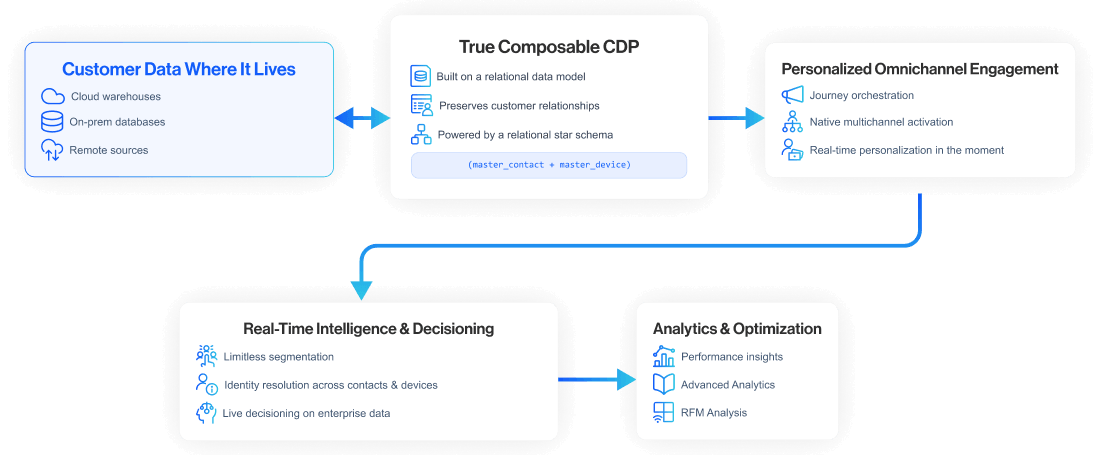
One of the most important roles of a CDP is creating a unified view of the customer.
Instead of maintaining separate records across ecommerce platforms, CRM systems, loyalty programs, mobile apps, and customer service channels, a CDP brings those interactions together into a single profile.
That matters because clean rooms depend on matching customer records across multiple organizations. The more complete and accurate your customer profiles are, the greater the likelihood of generating meaningful matches and trustworthy insights.
As we explored in our Composable CDP guide, unified customer profiles can strengthen every downstream use case that depends on customer data collaboration.
Context matters as much as identity
Knowing that a customer exists is useful, but understanding their relationship with your brand is where the value lies.
This is why data architecture is important.
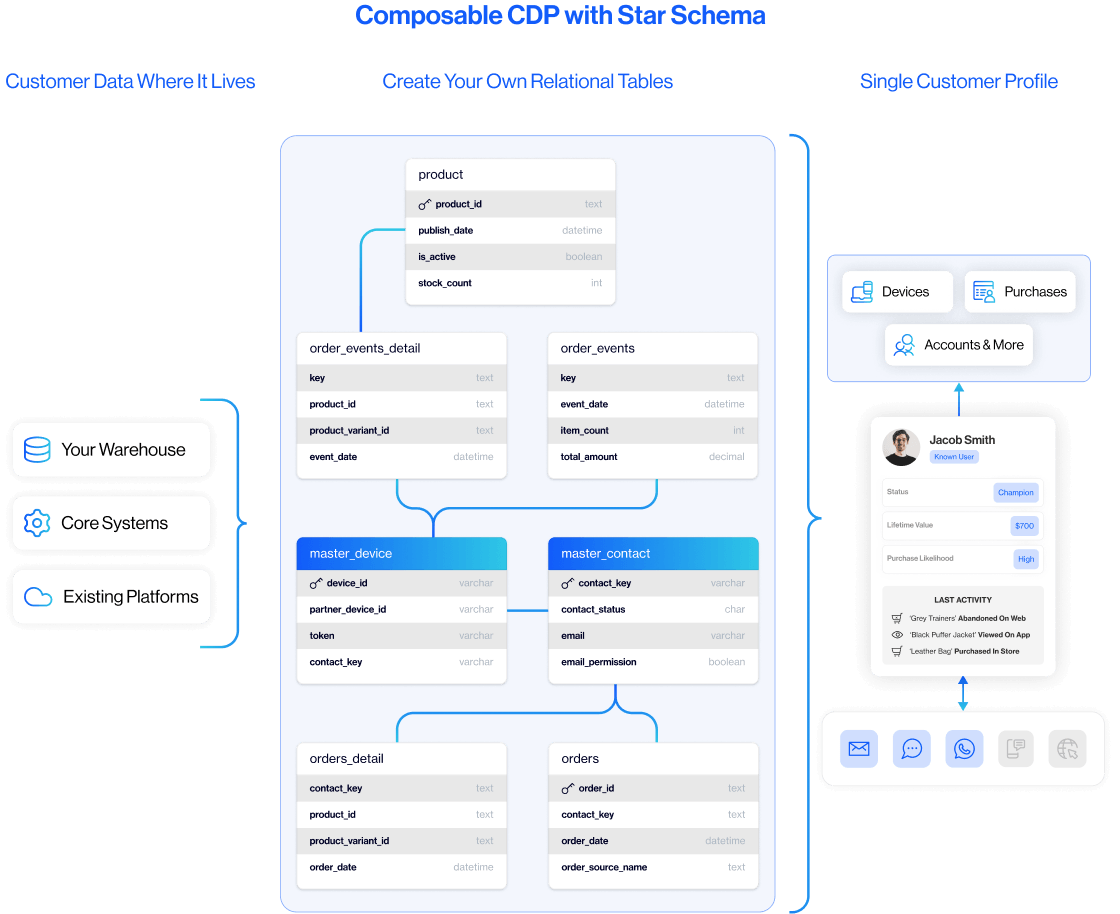
A customer profile that includes product ownership, loyalty status, transaction history, engagement behavior, and lifecycle stage provides a lot more analytical value than a simple collection of identifiers.
When that context enters a clean room, the resulting insights become far richer and more actionable.
As discussed in our guide to relational tables and star schema architecture, well-structured data creates a deeper understanding of customer behavior and business outcomes.
Fresh data creates more valuable collaborations
Data quality isn’t only about completeness, freshness is also important.
Many organizations still rely on batch imports and scheduled synchronization processes that update customer records hours or even days after an interaction takes place. By the time data reaches a clean room, it may already be out of date.
The closer organizations can get to real-time data availability, the more relevant their analysis becomes.
This is one of the key advantages of modern architectures that support remote sourcing and real-time access to customer data. Rather than working with yesterday’s information, teams can make decisions using a much more current view of customer behavior.
Governance creates confidence
Successful clean room collaboration depends on trust.
Organizations need confidence in the quality of the data they’re contributing, clarity around where that data resides, and control over how it is used.
That’s why governance will always be an important part of the conversation. When businesses maintain ownership of their customer data and control how it flows across their technology stack, participating in privacy-safe collaborations becomes significantly easier.
As we explored in our On-Premise CDP guide, data control and governance are becoming bigger priorities for organizations operating in regulated environments.
Ultimately, data clean rooms don’t replace the need for a strong customer data foundation. They actually increase its importance.
The organizations getting the most value from clean room collaborations won’t necessarily be the ones using the most sophisticated clean room technology. It will be the ones bringing the most unified, contextual, current, and well-governed customer data to the table.
Building a Clean-Room-Ready Customer Data Strategy
Before any data collaboration can happen, organizations need confidence in the quality, structure, and governance of the information they’re contributing.
That’s where the underlying customer data platform can really shine.
While D·engage isn’t a data clean room, its architecture helps organizations build the data foundation that clean room initiatives depend on. The same capabilities that support personalization, segmentation, and customer engagement also improve the quality of the data available for external collaboration.
One source of data, multiple use cases
One of the challenges organizations often face is maintaining different versions of customer data across multiple systems.
Marketing teams work from one dataset, analytics teams work from another, and partnership initiatives rely on separate exports and reconciliation processes. Over time, inconsistencies emerge: creating uncertainty around which version of the data is correct.
D·engage’s composable architecture helps address this challenge by treating the data warehouse as the source of truth. The same customer data that powers campaigns, journeys, and analytics can also support clean room collaborations.
Instead of maintaining separate datasets for different purposes, organizations can work from a consistent and trusted foundation.
Better profiles create better collaboration
Successful clean room analysis depends on accurate customer matching.
When customer identities are fragmented across multiple systems, opportunities for overlap and insight can be missed. Identity resolution and unified customer profiles help ensure that organizations bring complete, consistent records into collaborative environments.
This improves efficiency and increases the likelihood of generating meaningful insights from clean room analysis. It also helps partners work from a more accurate view of shared audiences.
Governance by design
Data governance is becoming more important as organizations navigate growing privacy expectations and regulatory requirements.
D·engage’s flexible deployment options (including on-premise and hybrid models) give organizations greater control over where customer data lives and how it’s managed. For businesses operating in regulated sectors such as financial services, telecommunications, and healthcare, that level of control is a huge advantage.
When organizations understand exactly where their data is stored and how it moves through their ecosystem, taking part in privacy-safe collaborations becomes far easier.
A philosophy aligned with modern data collaboration
Instead of copying information between systems, businesses are looking for ways to analyze and activate data closer to where it already exists. Instead of creating additional silos, they’re investing in architectures that reduce unnecessary movement and duplication.
This philosophy aligns closely with D·engage’s approach to remote sourcing, which allows organizations to query and work with external datasets without ingesting them into the platform first.
The result is a more flexible, efficient, and governed approach to customer data management: one that supports both day-to-day marketing activities and the growing demand for privacy-safe collaboration.
Ultimately, data clean rooms may be changing how organizations collaborate, but the fundamentals are the same. Success depends on having accurate customer data, a trusted source of truth, and the governance controls needed to use that data responsibly.
D·engage helps lay that foundation.
The Future of Data Collaboration Depends on Better Data Foundations
Data clean rooms are changing how organizations collaborate on customer data, making it possible to generate shared insights without compromising privacy.
But participating in a clean room is only one part of the equation. Organizations also need customer data that is unified, current, and governed well enough to support meaningful collaboration.
That’s where D·engage comes in.
With a composable architecture, unified customer profiles, remote sourcing capabilities, and flexible deployment options, D·engage helps organizations build the kind of data foundation that modern collaboration depends on. The same customer data that powers personalization, segmentation, and engagement can also support privacy-safe partnerships, measurement, and analysis.
As data collaboration continues to evolve, the organizations that succeed will be the ones that can connect privacy, governance, and customer understanding without sacrificing agility.
Ready to build a clean-room-ready customer data strategy? Book a consultation to see how D·engage helps unify, govern, and activate customer data for the next generation of marketing.
Moments We Help You Own
See how leading brands use our platform to enhance performance, improve customer experiences, and achieve measurable business outcomes.
Case Study
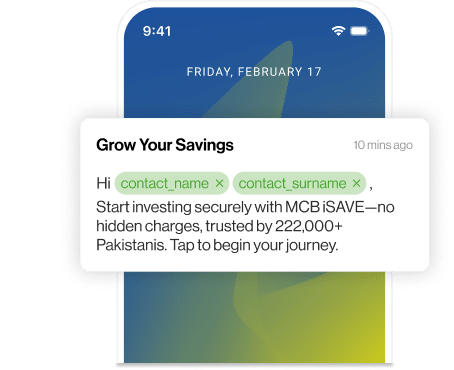
How MCB Funds achieved an 83% boost in account funding
“We boosted our efficiency with D•engage through automation, real-time data sync, and AI-driven targeting, achieving 83% higher account funding and 60% improved operations. All this in just the first year of its integration - This is truly phenomenal”
Monis Usman, EVP Head of Digital Business & Marketing- 83%improvement in account funding ratio
- 30%increase in average transaction size
- 60%improvement in operational efficiency

Case Study
Sportive Increases Transaction Value by 38% with D·engage CRM Integration
“D·engage’s platform perfectly aligned with Sportive’s business needs. The platform demonstrated superior performance in integrating customer data, generating personalized content, and automation capabilities”
Anıl Can Öztürk, Digital Commerce Director- 38%increase in transaction value
- 17%increase in customer shopping frequency
- 21%increase in Google Ads ROAS


Case Study
Beymen drives 30% more clicks and 15% more revenue with D•engage
“Since we started working with D•engage, we’ve gained significant operational efficiency in segmentation, campaign management, and omnichannel communication. We can design personalized campaigns end-to-end through the panel and easily measure content performance with A/B testing.”
Gürhan Öztürk, Communication and Platform Manager- 30%increase in click-through rates
- 15%additional monthly revenue
- 15%time savings in operational processes


Case Study
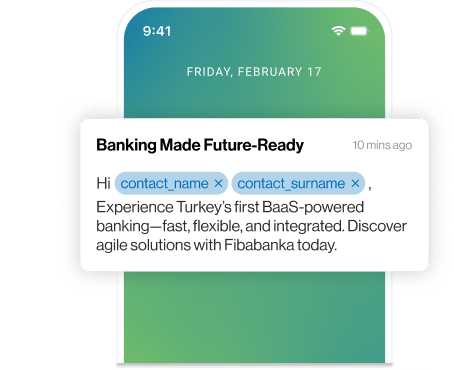
How Fibabanka Achieved 0% Downtime and 35% Cost Savings with D·engage
“Sending SMS and email messages without any disruptions is very important in banking processes. Any interruptions can affect our entire sales process. Therefore, the 24/7, high-availability of the platform we use is extremely critical for us.”
Korhan Kocabıyık, Platforms Development Director- 35%reduction in costs
- 18%reduction in time.
- 0%downtime with on-premise platform

Related Articles
Start Engaging Smarter
Bring all your data, channels, and customers together in one connected platform that works as fast as you do.