The 13-Year MarTech Cycle:
In 2013, the enterprise software world witnessed a defining wave of martech consolidation. The legacy enterprise suites spent billions acquiring the premier email challengers of their generation: Salesforce acquired ExactTarget, Oracle took Responsys, and Adobe bought Neolane.
Those deals promised a unified, all-in-one future.
Instead, they created an operational divide.
Over the decade that followed, modern consumer engagement outpaced batch-oriented enterprise stacks. Brands needed streaming event architectures, mobile-first orchestration, and tools designed for operational agility - not twelve-month technical consultancies.
A new wave of agile challengers emerged, with Braze leading the pack. Marketers flocked to them, often specifically to escape the friction, complexity, and administrative overhead of legacy marketing clouds.
Now, with Salesforce’s pending $5.66 billion agreement to acquire Braze, the martech pendulum has completed a full 13-year swing. The deal, which remains subject to Braze shareholder and regulatory approvals, is expected to close in Salesforce's fiscal year 2028 (starting in February 2027).
First, congratulations are in order. Bill Magnuson, Jon Hyman, and the Braze team built an exceptional platform and community over fifteen years. A 58% market premium validates what modern marketers have known for years: real-time, event-driven customer engagement is not an auxiliary feature - it is the core engine of modern business growth.
Yet behind the congratulatory posts across the marketing community, a familiar unease has set in.
A well-deserved congratulations to Bill, Jon, and the entire Braze team on a historic transaction. This pending deal is the ultimate proof that the market values speed and precision above all else. Legacy systems are finally acknowledging that you cannot fake real-time engagement. We built D·engage precisely because we saw this shift coming, and this level of investment validates that natively built omnichannel is the future of enterprise growth.
Aman Dotani
Co-Founder, CEO | D·engage
The Predictable Gravity of Enterprise Suites
The industry’s collective memory is long, and senior marketing leaders have seen this film before.
When an independent challenger that won market share on user experience, speed, and architectural simplicity is absorbed into a mega-suite, three predictable shifts occur:
- Roadmaps turn inward: Over the next 24 to 36 months, valuable engineering bandwidth is inevitably redirected toward back-end reconciliation – stitching streaming data pipelines into legacy relational schemas, aligning identity graphs, and binding features to broader ecosystem plays like Data Cloud and Agentforce.
- The “Suite Tax” re-emerges: Specialist platforms thrive because they are dedicated to marketer productivity. Within mega-clouds, products frequently become levers to pull enterprise-wide licensing commitments, higher total cost of ownership (TCO), and bundled services brands didn’t ask for.
- Agility yields to process: The exact reason marketers chose an agile platform – deploying campaigns in minutes rather than waiting on data engineering sprints – gradually gets subordinated to the governance models of enterprise IT suites.
Thousands of brands made the deliberate decision to unbundle their stacks over the last decade because monolithic suites couldn’t deliver the speed their customers demanded. As that independence is absorbed, the market faces an immediate question:
Where do brands go when they want enterprise power without enterprise paralysis?
Why Independence Is the Ultimate Feature
Every time an enterprise monolith acquires the leading challenger that was winning against it, it creates an innovation vacuum. It clears the field for independent platforms built from the ground up for where marketing is going, not where it was ten years ago.
Huge congratulations to the Braze team on an impressive milestone. But as the martech landscape consolidates into massive suites, the trade-off for marketers is almost always execution speed. In modern commerce, agility is the real competitive moat. Our conviction at D·engage has always been that staying independent and natively built allows our customers to launch in minutes, not quarters, without getting caught in the gravity of legacy ecosystem friction.
Itri Osman
Co-Founder, CTO | D·engage
At D·engage, we have watched this cycle unfold with absolute clarity on our mission.
We believe marketing teams should never have to compromise between deep architectural power and daily operational velocity. You shouldn’t need a multi-million-dollar systems integration budget just to trigger an intelligent, cross-channel journey off live customer signals.
This belief has driven our journey and our accelerating global trajectory. We directly solve the exact challenges brought on by industry consolidation:
- Built Natively to Prevent Inward Roadmaps: D·engage didn’t assemble its customer data platform and cross-channel engine through successive corporate mergers. We engineered a single, unified CDP natively from day one. There is no reconciliation layer or conflicting data models, ensuring our engineering focus remains entirely on delivering customer-facing innovation, not stitching internal pipelines.
- Zero Data Duplication to Avoid the “Suite Tax”: Rather than forcing enterprises into closed proprietary databases or broader ecosystem plays, D·engage connects natively to your existing data infrastructure – whether your data lives in Snowflake, BigQuery, or PostgreSQL. You maintain total data sovereignty and predictable economics without being pressured into bundled enterprise services.
- Time-to-Value Measured in Weeks to Guarantee Agility: While monolithic suites measure deployment roadmaps in quarters and years, D·engage preserves the execution speed marketers demand. Our customers average full go-live in under eight weeks, realizing measurable ROI in fewer than five months.
The Road Ahead
The pending acquisition of Braze confirms that modern, real-time engagement is the most strategic layer in the enterprise software ecosystem. But consolidation doesn’t solve the fundamental challenge marketers face every day; it usually complicates it.
As the industry resets and the cycle begins anew, the modern marketing organization doesn’t need another monolithic suite. It needs independence, speed, and a platform that respects the pace of modern commerce.
At D·engage, we are proud to remain independent, focused, and laser-targeted on building the future of customer engagement for the brands driving tomorrow’s growth.
Moments We Help You Own
See how leading brands use our platform to enhance performance, improve customer experiences, and achieve measurable business outcomes.
Case Study
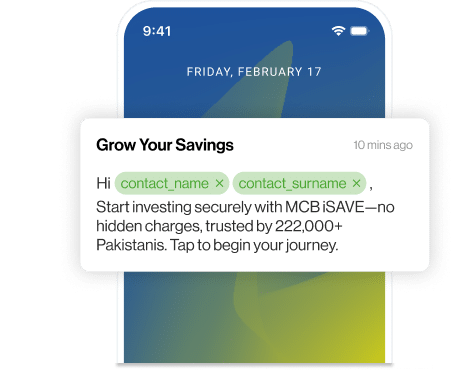
How MCB Funds achieved an 83% boost in account funding
“We boosted our efficiency with D•engage through automation, real-time data sync, and AI-driven targeting, achieving 83% higher account funding and 60% improved operations. All this in just the first year of its integration - This is truly phenomenal”
Monis Usman, EVP Head of Digital Business & Marketing- 83%improvement in account funding ratio
- 30%increase in average transaction size
- 60%improvement in operational efficiency

Case Study
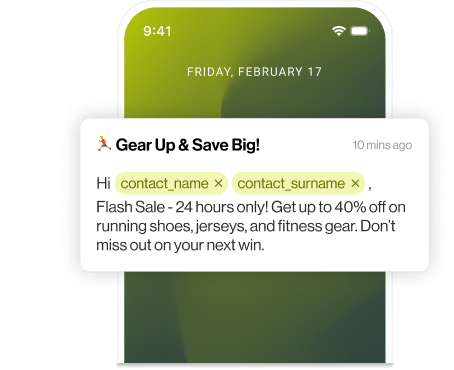
Sportive Increases Transaction Value by 38% with D·engage CRM Integration
“D·engage’s platform perfectly aligned with Sportive’s business needs. The platform demonstrated superior performance in integrating customer data, generating personalized content, and automation capabilities”
Anıl Can Öztürk, Digital Commerce Director- 38%increase in transaction value
- 17%increase in customer shopping frequency
- 21%increase in Google Ads ROAS

Case Study
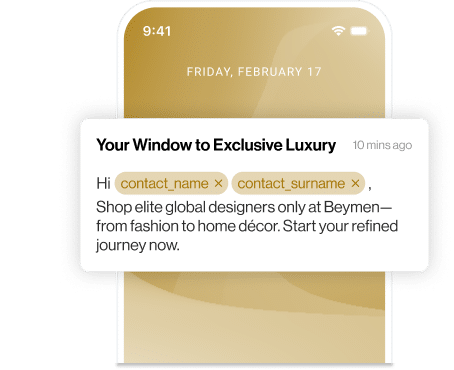
Beymen drives 30% more clicks and 15% more revenue with D•engage
“Since we started working with D•engage, we’ve gained significant operational efficiency in segmentation, campaign management, and omnichannel communication. We can design personalized campaigns end-to-end through the panel and easily measure content performance with A/B testing.”
Gürhan Öztürk, Communication and Platform Manager- 30%increase in click-through rates
- 15%additional monthly revenue
- 15%time savings in operational processes

Case Study
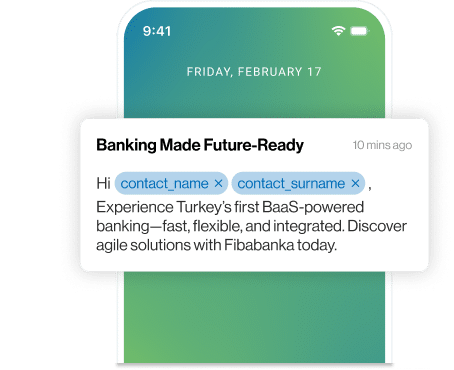
How Fibabanka Achieved 0% Downtime and 35% Cost Savings with D·engage
“Sending SMS and email messages without any disruptions is very important in banking processes. Any interruptions can affect our entire sales process. Therefore, the 24/7, high-availability of the platform we use is extremely critical for us.”
Korhan Kocabıyık, Platforms Development Director- 35%reduction in costs
- 18%reduction in time.
- 0%downtime with on-premise platform

Related Articles
Start Engaging Smarter
Bring all your data, channels, and customers together in one connected platform that works as fast as you do.