The ONLY marketing automation platform with a composable CDP
Data Clean Rooms: The Neutral Meeting Space
“People hear “data clean room” and assume it’s some kind of vault. It’s actually more useful to think of it as a neutral meeting space.
Two organizations each bring their own customer data to the table. Neither one gets to see, copy, or walk away with the other’s records.
In that space, the data gets anonymized, matched where it overlaps, and analyzed. Only the aggregated result leaves the room. A retailer learns whether a campaign drove purchases. A publisher learns how much its audience overlaps with an advertiser’s.
Nobody hands over a customer list. Nobody exports raw records.
And this isn’t some kind of niche setup, either. Google has Ads Data Hub, Amazon has its own version - Snowflake and AWS run independent clean rooms too. It’s different vendors, but the same underlying idea.
The whole point is you get the insight from the collaboration without the exposure that used to come with it.”
Data Clean Room vs CDP vs DMP
“You may have heard CDP, DMP, and data clean room into the same sentence like they’re competing for the same job. They’re not.
A CDP unifies your own first-party data into one customer view, used for segmentation and personalization. A DMP was built to activate third-party data for advertising, cookies, device IDs, that whole model. A clean room doesn’t do any of those things.
A clean room doesn’t activate anything inside your channels. It just gives two organizations a safe way to analyze data they already have, without either side exposing their customer records.
So if you’re trying to personalize your own customer experience, that’s a CDP problem. If you’re trying to collaborate with a retailer or a publisher without handing over a customer list, that’s what a clean room is for.
And neither one replaces the other. A clean room without good first-party data behind it just produces weaker matches.
Different stage of the lifecycle and a different job entirely.”
Fresh Data vs. Batch Syncs
“It’s not just whether your data is accurate, it’s whether it’s current.
A lot of organizations are still running on batch imports. Customer data gets synced overnight, sometimes only once a day.
So by the time that data actually reaches the clean room, it might already be hours old. A purchase that happened this morning isn’t in there yet. A status change from yesterday afternoon might be missing too.
And the clean room can only work with what it’s given. It can’t tell you the data is stale. It just analyzes whatever arrives.
Remote sourcing changes that equation. Instead of syncing a copy overnight, you’re querying the live data at the moment you need it.
Your clean room analysis is only as current as the data feeding it. The right CDP makes sure that data is current.”
Does a Clean Room fix data quality, or expose it?
“Of course there are marketing leaders who think that showing up with your data and joining the collaboration will unlock insight on its own.
But a clean room can only match and analyze what you actually give it. If your customer records are scattered across five systems that don’t talk to each other, the clean room doesn’t know that. It just gives you a worse match rate, without meaning to.
When this happens your audience overlap might look smaller than it really is. Attribution gets less reliable and the opportunities that should have been visible stay hidden.
So a clean room doesn’t solve a data quality problem. It exposes one that was already there.
Which means the real work isn’t choosing the right clean room. It’s making sure what you bring to it is worth analyzing in the first place.”
Is First-Party Data the only asset left?
“It’s as though everyone’s talking about first-party data like it’s the only thing that matters. But this hasn’t happened suddenly.
Safari and Firefox started limiting third-party tracking years ago, before the COVID-19 pandemic even. Apple’s App Tracking Transparency made cross-app tracking opt-in back in 2021. GDPR raised the bar on consent, and CCPA followed in California. This has been going on for years.
Together they removed the foundation that advertising and measurement used to stand on.
So brands weren’t given a choice between first-party data and the old approach. The old approach just stopped working, and first-party data was what the only thing left standing when the dust settled.
Clean rooms didn’t invent privacy-first collaboration. They just gave organizations a way to act on the only model that was still available to them.
That’s why so much of this conversation keeps circling back to the same point. Strong first-party data isn’t one option among several anymore.
What is the problem with Data Clean Room readiness?
“The hardest problem with clean room readiness is usually internal. The call is coming from inside the house.
Marketing works from one dataset. Analytics works from another. Partnerships build their own export to feed a collaboration. Three teams have three slightly different versions of the same customer.
And nobody quite agrees on which version is right when a partner needs an answer fast.
D·engage’s composable architecture treats the warehouse itself as the source of truth. The same data that powers a campaign or a journey is the same data that goes into a clean room collaboration.
There’s no separate export, or reconciliation meeting to agree whose numbers are correct.
One dataset, trusted everywhere it’s used. Isn’t that what “single customer view” was always supposed to mean?”
Moments We Help You Own
See how leading brands use our platform to enhance performance, improve customer experiences, and achieve measurable business outcomes.
Case Study
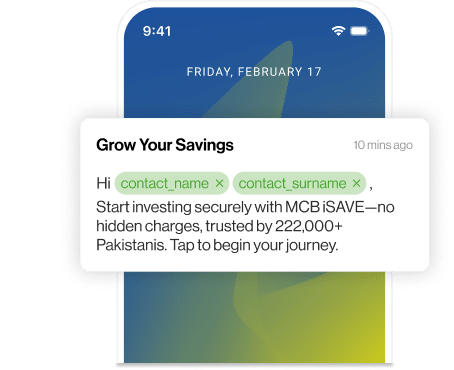
How MCB Funds achieved an 83% boost in account funding
“We boosted our efficiency with D•engage through automation, real-time data sync, and AI-driven targeting, achieving 83% higher account funding and 60% improved operations. All this in just the first year of its integration - This is truly phenomenal”
Monis Usman, EVP Head of Digital Business & Marketing- 83%improvement in account funding ratio
- 30%increase in average transaction size
- 60%improvement in operational efficiency

Case Study
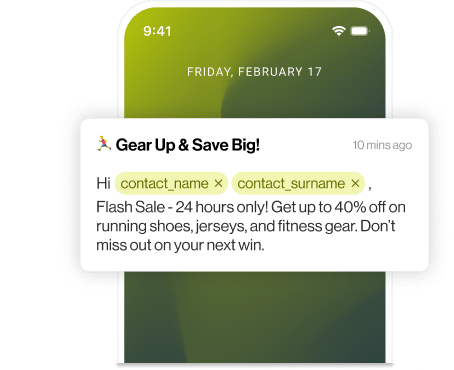
Sportive Increases Transaction Value by 38% with D·engage CRM Integration
“D·engage’s platform perfectly aligned with Sportive’s business needs. The platform demonstrated superior performance in integrating customer data, generating personalized content, and automation capabilities”
Anıl Can Öztürk, Digital Commerce Director- 38%increase in transaction value
- 17%increase in customer shopping frequency
- 21%increase in Google Ads ROAS

Case Study
Beymen drives 30% more clicks and 15% more revenue with D•engage
“Since we started working with D•engage, we’ve gained significant operational efficiency in segmentation, campaign management, and omnichannel communication. We can design personalized campaigns end-to-end through the panel and easily measure content performance with A/B testing.”
Gürhan Öztürk, Communication and Platform Manager- 30%increase in click-through rates
- 15%additional monthly revenue
- 15%time savings in operational processes


Case Study
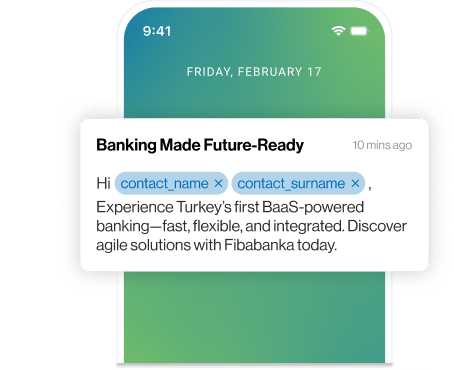
How Fibabanka Achieved 0% Downtime and 35% Cost Savings with D·engage
“Sending SMS and email messages without any disruptions is very important in banking processes. Any interruptions can affect our entire sales process. Therefore, the 24/7, high-availability of the platform we use is extremely critical for us.”
Korhan Kocabıyık, Platforms Development Director- 35%reduction in costs
- 18%reduction in time.
- 0%downtime with on-premise platform

Related Articles
Start Engaging Smarter
Bring all your data, channels, and customers together in one connected platform that works as fast as you do.