D·engage: Composable AI Marketing Platform
Most conversations about AI models for marketing begin and end with generative AI. But, while generative AI has captured most of the headlines, predictive AI is where marketers often find the greatest business value.
The content creation capabilities of tools like ChatGPT, Copilot and Claude are genuinely valuable, but content creation has never been the hardest part of customer engagement. Knowing who to engage, when to reach them, and what they're most likely to respond to is often far more difficult.
That's where predictive AI shows its value. While generative AI answers, "what should I write?" predictive AI answers "what should I do?"
Why Generative AI Has Become the Face of Marketing AI
Unlike many forms of artificial intelligence that work behind the scenes, generative AI produces something you can see immediately. Ask it to write an email, suggest campaign ideas, or rewrite a product description, and the results appear within seconds.
That instant gratification has made it easier for marketers to see its potential and experiment with it in their everyday work. It’s also easy for SaaS companies to demonstrate to potential clients.
For example, a product demo showing large language models generating 10 subject lines in as many seconds is far more tangible than one explaining how an algorithm identified subtle changes in customer behaviour over the past three weeks.
One capability can be seen right away, but the other is far less tangible (even if it's often more valuable).
For many teams, early AI wins have come through productivity gains. Copywriters can get over their writer's block more quickly, spin-up first drafts in less time, and create multiple content variations without starting from scratch every time.
Those efficiencies free up time for refinement, testing, and creative thinking, but doesn't tackle the strategic challenge of deciding what action to take in the first place.
What Predictive AI Does
Rather than generating new content like generative AI does, predictive AI analyzes large volumes of customer data to identify patterns, estimate future behavior, and recommend the next best action.
It looks beyond what’s happening today to answer an equally important question: what’s likely to happen next?
For marketers, that can mean identifying customers who are at risk of churning, predicting which shoppers are most likely to make another purchase, recommending products based on previous behavior, or finding the customers most likely to respond to a particular campaign.
As customer journeys get more complicated, every interaction leaves another signal behind . Customers browse products, open emails, abandon carts, download apps, contact support teams, and engage across multiple channels. Individually, those actions don’t say a lot. But together, they create patterns that are almost impossible to spot manually.
Rather than relying on broad assumptions or static customer segments, predictive AI helps marketers to identify emerging behaviors much earlier and respond while there’s still an opportunity to influence the outcome.
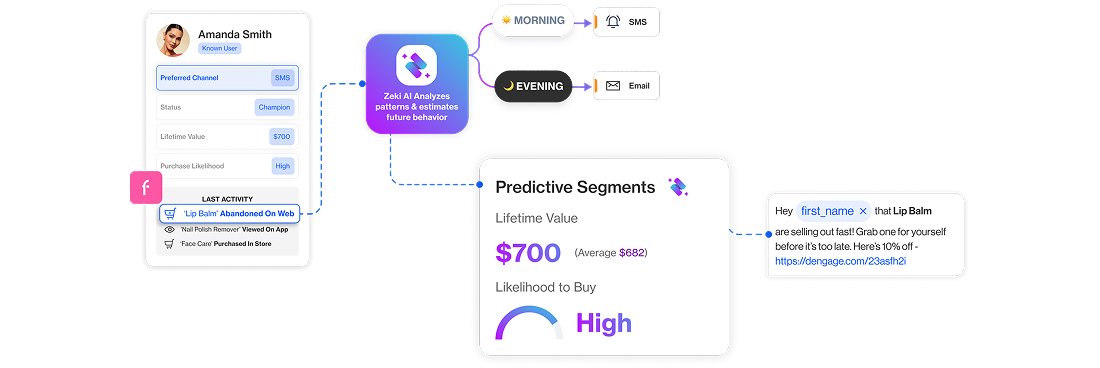
What questions does predictive AI answer?
Instead of treating every customer the same, predictive AI helps answer questions such as:
- Which customers are most likely to convert?
- Who seems to be disengaging?
- Which products is this customer most likely to buy next?
- When is the best time to send this campaign?
- Which audience should receive this offer?
Predictive AI won’t replace strategists, but it can give them a stronger foundation for decision-making.
Why Great Content Isn't Enough to Make a Great Campaign
Generative AI has increased the speed at which marketers can produce content, but content doesn’t drive results by itself.
Imagine the perfect email. The subject line is compelling, the copy is polished, and the call to action is clear.
But if that email reaches the wrong audience, arrives after the customer has already converted, or promotes a product they have no interest in, the quality of the writing is irrelevant.
That’s why great results depend on more than great content.
Successful campaigns rely on a series of decisions that happen long before the first word is written. Who should receive the message? When should it be sent? Which channel is most likely to drive engagement? What offer is most relevant for this particular customer?
These are the questions predictive AI can answer.
Predictive AI improves the content by improving the decisions surrounding it. It helps marketers prioritize opportunities, identify the customers who are most likely to engage, and deliver messages when they’re most likely to have an impact.
Predictive AI Vs. Generative AI: what’s the difference?
As generative AI and predictive AI become more widely adopted, it’s easy to think of them as competing technologies. In reality, the two types of artificial intelligence work best when they’re used together.
An email written by generative AI still needs the right audience and the right timing to succeed, just as the right audience still needs relevant content to encourage them to act.
Here’s how each technology differs, and what each is best at.
| Predictive AI | Generative AI | |
|---|---|---|
| What it does | Predicts customer behavior | Creates new content |
| Primary goal | Better decisions | Faster execution |
| Typical outputs | Audiences, recommendations, next best actions | Emails, subject lines, product descriptions |
| Biggest strength | Identifying opportunities | Scaling content creation |
| Best used for | Personalization, targeting, timing | Content generation and optimization |
The greatest value comes when these capabilities can work together seamlessly. With Zeki AI, predictive insights and generative capabilities work side by side within D·engage, allowing marketers to move from identifying opportunities to executing personalized campaigns in a single workflow.
What Generative and Predictive AI Look Like in Practice
Imagine a retailer preparing an email campaign to encourage repeat purchases. Without predictive AI, the marketing team might send the same promotion to every customer who bought in the last six months.
Predictive AI makes the approach more targeted. It identifies which customers are most likely to purchase again, highlights those whose engagement is beginning to dip, recommends products based on previous browsing and purchase behavior, and suggests the best time to send the campaign.
Generative AI then builds on those insights by creating personalized subject lines, product descriptions, and email copy tailored to each audience.
Instead of simply producing more content, a combination of both generative and predictive AI helps deliver more relevant marketing experiences.
Looking Beyond the AI Hype
Generative AI has changed how marketers create content, but that’s only one part of delivering meaningful customer experiences.
The bigger challenge is knowing what to say, who to say it to, and when to reach them. That’s where predictive AI makes the difference.
Rather than replacing generative AI, predictive AI complements it by helping marketers make smarter decisions that can inform content creation. One determines the right course of action and the other helps bring that strategy to life more efficiently.
That’s how Zeki AI works. By combining predictive and generative AI within D·engage, Zeki helps marketers uncover opportunities, create relevant content, and act on insights without switching between disconnected tools. Instead of treating prediction and generation as separate capabilities, it brings them into a single marketing workflow.
Why Zeki AI Combines Prediction and Generation in One Workflow
Many marketing platforms now advertise both predictive and generative AI. But as we’ve discussed, simply having both capabilities on offer doesn’t automatically lead to better marketing.
The real difference lies in how AI is built into the platform, and how these two capabilities interact with each other.
When vendors bolt AI onto existing software as an additional assistant or standalone feature, it makes things harder for marketers. They have to move between tools, manually transfer audiences, or rely on AI that has limited visibility of customer behavior and campaign performance.
Zeki AI is different because it’s embedded throughout D·engage. This gives it access to the live customer data, campaign history, business rules, and marketing workflows already inside the platform. Instead of generating recommendations in isolation, it understands the context behind every campaign, with no need for extra manual workflows.
That makes it quicker and easier for marketers to move from identifying the right audience to creating personalized content to launching campaigns without switching between disconnected systems. AI becomes part of the workflow rather than another tool to manage.
Because of this, Zeki AI from D·engage creates campaigns that are more relevant, more actionable, and better aligned with real marketing goals.
Smarter Marketing Starts with Smarter AI
As AI continues to evolve, the most successful marketing teams won’t be the ones relying on a single model or capability. They’ll be the ones combining predictive insights with generative creativity to deliver experiences that are both timely and relevant.
Learn more about Zeki AI, or request a demo to see how D·engage helps marketers make smarter decisions, execute campaigns faster, and deliver more relevant customer experiences.
Moments We Help You Own
See how leading brands use our platform to enhance performance, improve customer experiences, and achieve measurable business outcomes.
Case Study
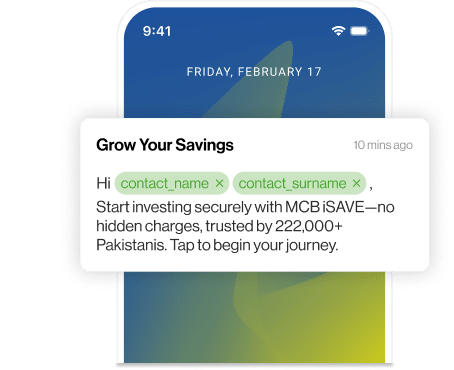
How MCB Funds achieved an 83% boost in account funding
“We boosted our efficiency with D•engage through automation, real-time data sync, and AI-driven targeting, achieving 83% higher account funding and 60% improved operations. All this in just the first year of its integration - This is truly phenomenal”
Monis Usman, EVP Head of Digital Business & Marketing- 83%improvement in account funding ratio
- 30%increase in average transaction size
- 60%improvement in operational efficiency

Case Study
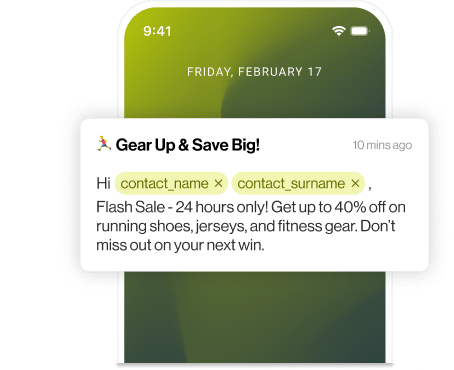
Sportive Increases Transaction Value by 38% with D·engage CRM Integration
“D·engage’s platform perfectly aligned with Sportive’s business needs. The platform demonstrated superior performance in integrating customer data, generating personalized content, and automation capabilities”
Anıl Can Öztürk, Digital Commerce Director- 38%increase in transaction value
- 17%increase in customer shopping frequency
- 21%increase in Google Ads ROAS

Case Study
Beymen drives 30% more clicks and 15% more revenue with D•engage
“Since we started working with D•engage, we’ve gained significant operational efficiency in segmentation, campaign management, and omnichannel communication. We can design personalized campaigns end-to-end through the panel and easily measure content performance with A/B testing.”
Gürhan Öztürk, Communication and Platform Manager- 30%increase in click-through rates
- 15%additional monthly revenue
- 15%time savings in operational processes


Case Study
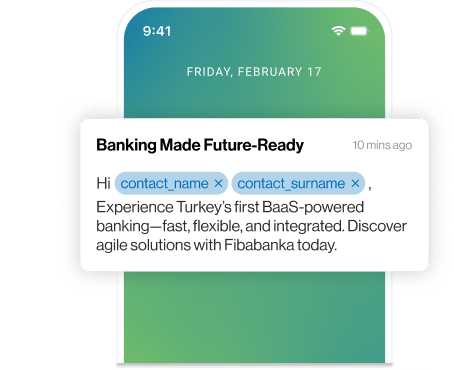
How Fibabanka Achieved 0% Downtime and 35% Cost Savings with D·engage
“Sending SMS and email messages without any disruptions is very important in banking processes. Any interruptions can affect our entire sales process. Therefore, the 24/7, high-availability of the platform we use is extremely critical for us.”
Korhan Kocabıyık, Platforms Development Director- 35%reduction in costs
- 18%reduction in time.
- 0%downtime with on-premise platform

Related Articles
Start Engaging Smarter
Bring all your data, channels, and customers together in one connected platform that works as fast as you do.